.png)
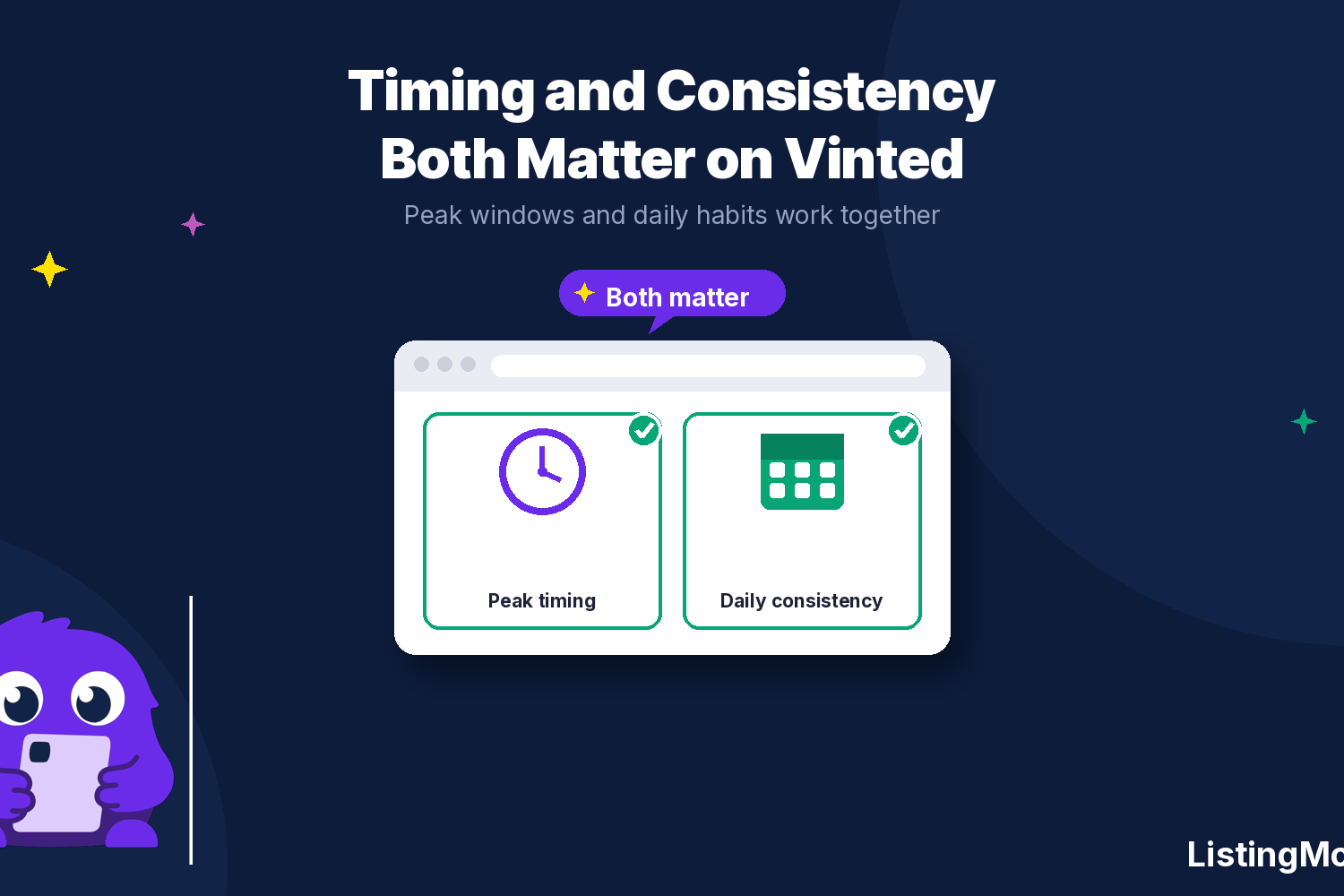
The best time to list on Vinted is real, and it's worth planning around. Evenings and weekends see more buyers scrolling, and both platforms give a fresh listing a short visibility boost the moment it goes live. Land that boost when buyers are actually online and you get more eyes on your item. But peak timing only does its job if you're also listing often enough that something of yours is going live regularly. Get the hour right once a week and you're leaving most of the week uncovered. That's the part most "best time" guides skip.
For a long stretch of my time on Depop, I listed from 6 to 8 every night, without fail. That slot wasn't an accident. Evenings are when people are off work and browsing, so it's a genuinely good window. But the reason it worked as well as it did wasn't just the hour, it was that I never missed a night. Peak timing got each listing a good start. Showing up every single day was what kept my shop moving.
Vinted and eBay are both busiest in the evenings and at weekends, because that's when most people are off work and scrolling. If you list at 3am on a Tuesday, fewer people will see it in the first hour than if you list at 7pm on a Sunday. That's just common sense about when your buyers are awake, and it's backed by something real: both platforms give a new listing a short-lived visibility boost when it first goes live, showing it to your followers and to people browsing your category or size. Land that boost during a peak window and you get meaningfully more eyes on the item. Land it at 3am and the boost fires into an empty room.
So if you can choose when to hit publish, choose a peak window. It's a genuine, low-effort edge.
Where it gets murky is precision. Search around and you'll find one site insisting Sunday 8 to 10pm accounts for 38% of all sales. Another says Friday afternoon is a golden window. A third says Friday is the worst day of the week to list, full stop. None of them publish their working, and eBay and Vinted don't release this data publicly, so there's no way to check any of it. The same goes for claims about exactly how long eBay's new-listing visibility boost lasts: estimates I found ranged from 2 hours to 2 weeks. Worth knowing too: several of the loudest voices on this topic are scheduling or repricing tools with an obvious reason to convince you that hitting one precise "right" hour is what separates selling from not.
The honest version is this: broad peak windows are real and worth using. The specific hour-by-hour precision being sold to you on top of that is mostly guesswork. Use the broad pattern, don't lose an evening trying to reverse-engineer the exact minute.
If your listings aren't selling, the far more common culprit is one of these:
Oli Brown, co-founder here at Listing Monster and a reseller before that, ran the numbers on his own stock:
When I started reselling I left listings untouched at the same price for months. My 90-day sell-through was below 50%. I switched to a simple rule that I stuck to no matter what: discount every two weeks, refresh at 60 days. Sell-through hit 75%. My weekly sales were up nearly 50% even with a slight drop in average price.
That's a big, reliable swing on its own, and it stacks with picking peak windows to list in rather than replacing it. The two work together, not against each other.
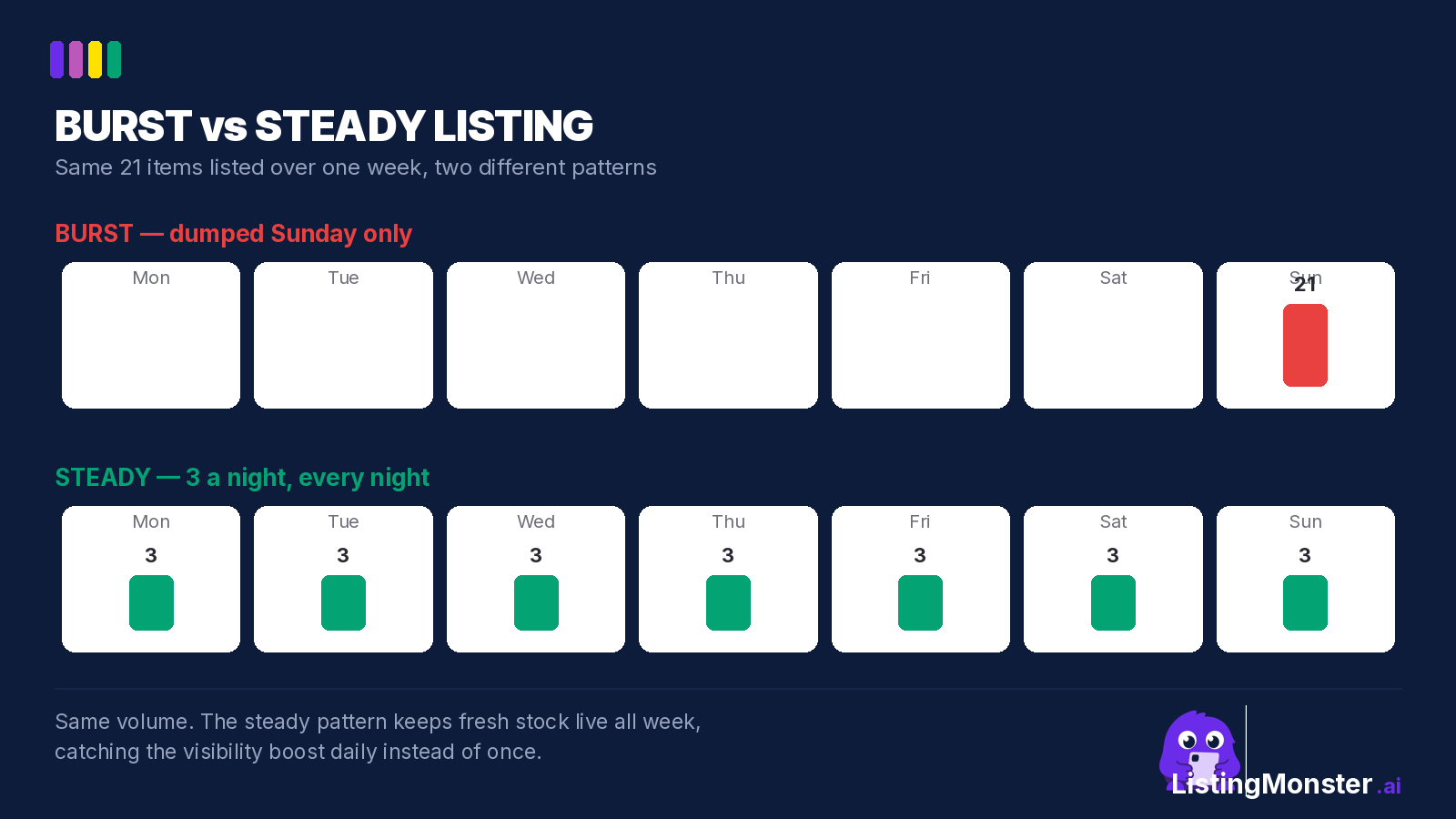
Just as important as choosing a peak window is whether you list at all, consistently. A steady drip of new listings, spread across the week rather than dumped in one go, means more of your stock is catching that fresh-listing boost at any given time, and it means buyers who follow you see regular activity rather than one big dump followed by silence.
You don't need to hit publish at the exact same minute every day to get this benefit. You need enough items going live regularly, ideally during a peak window each time, that your stock is consistently catching buyers when they're actually browsing. That's a habit you build, and it's entirely within your control.
My old 6 to 8pm routine worked for exactly this reason, and because it was a peak window too. Two hours I never skipped, at a time buyers were actually online. If I'd listed the same volume in one erratic burst a week instead, even at a great hour, I'd have had long stretches with nothing fresh live at all.
A few broad, low-effort patterns are worth building into your routine:
Yes, genuinely. Both platforms see more buyer activity in evenings and at weekends, and a new listing gets a short visibility boost when it goes live, so landing that boost during a peak window puts your item in front of more people. It works best alongside consistency: a good hour used every day outperforms the same good hour used once a week.
Weekday evenings and weekend afternoons see more browsing, so they're worth building your routine around. Pick a slot in one of these windows and stick to it. The gain from choosing a peak window is real, and it compounds when you repeat it daily rather than treating it as a one-off.
Aim for a steady drip rather than one big batch a week, ideally landing each listing during a peak window. Spreading listings across several days means more of your stock is catching the fresh-listing visibility boost at times buyers are actually online, and it signals ongoing activity to buyers who follow your shop. Timing gets each listing a good start; frequency keeps that advantage going all week.
Nobody outside eBay knows for certain. Public estimates range from a couple of hours to a couple of weeks, and most of the sources making confident claims are scheduling or repricing tools with a reason to oversell the importance of exact timing. Use the general pattern, evenings and weekends are safe bets, rather than trusting any specific number you read, including this one.
Yes, if it helps you consistently hit a peak window like evenings or weekends. That's a routine worth building. Where it stops paying off is chasing an ultra-precise claim, like an exact 20-minute slot said to outsell every other hour, since that level of precision isn't verifiable and won't beat a sensible peak window used consistently.
.svg)

.png)