Is Reselling a Good Side Hustle in 2026? An Honest Answer
Is Reselling a Good Side Hustle in 2026? An Honest Answer
Is reselling a good side hustle in 2026? Yes. It is one of the few you can start today, for free, with things you already own, and the buyers are already waiting for you. The US secondhand market is on track to reach $306.5 billion by 2030, and 93% of Americans bought something used last year. The honest catch: reselling rewards consistency. The people who treat it like a system out-earn the people who treat it like a one-off yard sale.
Here is what reselling actually looks like as a side hustle right now, what you can realistically make, where it gets hard, and how to start this weekend.
You can start for free, today
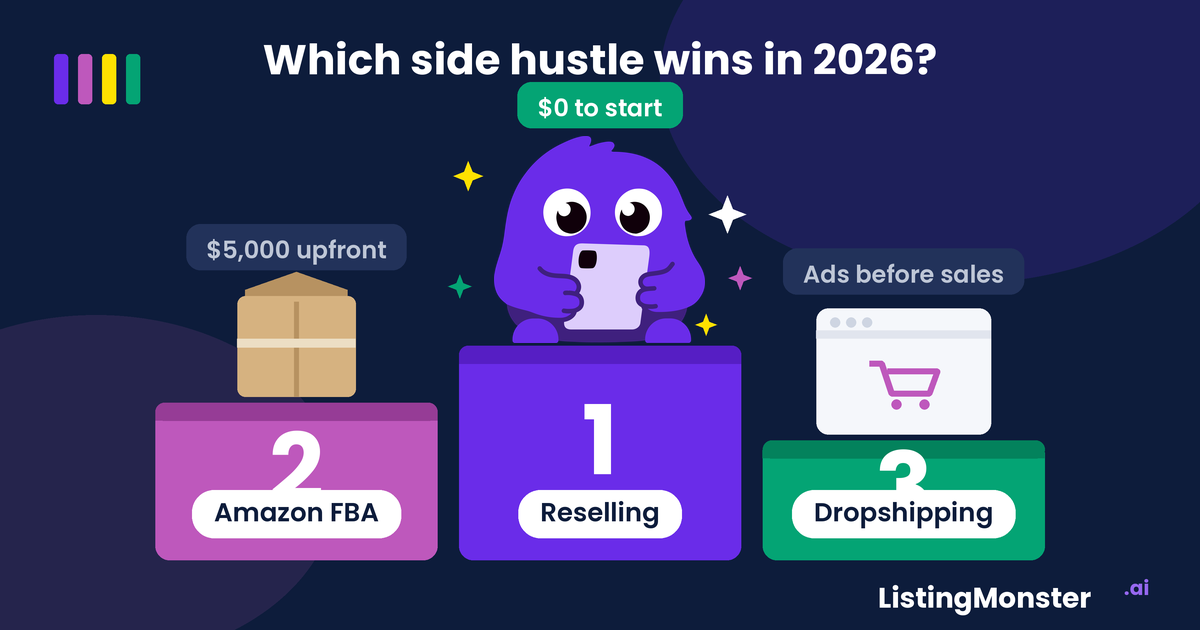
Most "best side hustle" lists bury the cost in the small print. Amazon FBA can run $1,000 to $5,000 before your first product reaches a warehouse. Dropshipping means building a store and paying for ads before a single sale. Those are not low-barrier starts. They are investments with real risk.
Reselling works the other way around. You list things you already own, on apps you can join in minutes, and find out what sells. Your first sale can happen today. If nothing sells, you are out nothing but a little time. That is the actual floor, and almost no other side hustle has one this low.
Your buyers are already there
The hardest part of most side hustles is finding customers. Reselling skips that problem, because the marketplaces already hold the audience.
eBay has around 135 million active buyers worldwide. Poshmark reports more than 130 million users. Depop has roughly 56 million. And in January 2026, Vinted launched in the US with zero seller fees, bringing its 100 million plus global user base to American sellers while competition here is still thin.
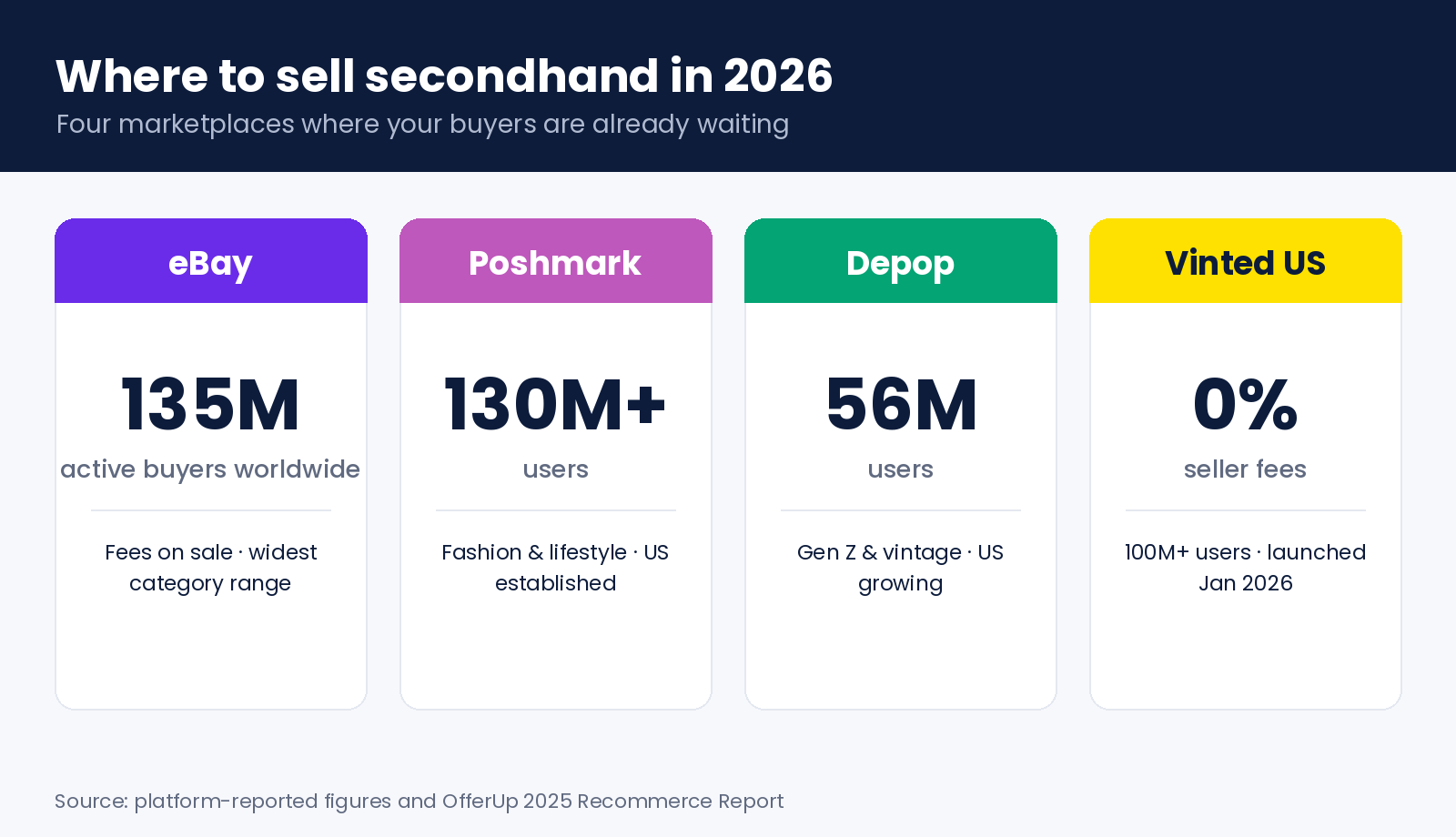
You do not pay for any of that reach up front. On most platforms, fees only apply when you make a sale, so there is no fixed cost eating into your income before it starts. Vinted US currently charges sellers nothing at all.
The market is growing, even when the economy is not
Here is something you do not see with most side hustles: the market underneath it is expanding, and it tends to hold up when money gets tight.
According to OfferUp's 2025 Recommerce Report, the US recommerce market is projected to grow 34% by 2030, reaching $306.5 billion and 8% of all retail spending. In the past year, 93% of Americans bought something secondhand and 54% sold something. When the economy feels shaky, 69% of shoppers say they are more likely to buy or sell used. Good times or bad, the demand holds.
.png)
It teaches you real business skills
This one gets overlooked. Reselling is a hands-on business education where the stakes are low enough that mistakes do not hurt.
Sourcing is procurement. Writing listings is copywriting and search optimization. Tracking what sells and what sits is inventory and cash-flow management. Working out your margin on a jacket you found at a thrift store for $8 is financial planning. Every dry business-school concept, learned by doing. Resellers who later start other businesses are not beginning from zero. They already know how to buy, sell, and run an operation.
It fits around your actual life
Most side hustles are either flexible in theory but exhausting in practice, or they demand specific hours you do not have. Reselling bends to your schedule.
Work full-time? Saturday morning at a thrift store or estate sale is your sourcing window, and listing happens in 20-minute pockets, on the couch, on a commute, whenever. Studying? One good sourcing run can cover a week of expenses. Semi-retired? It is income without anyone setting your hours. And if life gets busy and you step back for a month, your inventory just waits for you.
How much can you make reselling?
Income depends on hours, niche, and how many platforms you sell on. A realistic casual range is a few hundred dollars a month at 5 to 10 hours a week, scaling from there as you reinvest and get faster.
It can become real money. OfferUp found that 57% of resellers use what they earn to cover bills and everyday expenses, and one in three Gen Z sellers earns $301 to $500 from secondhand sales. Plenty of full-time resellers started exactly where you are, with a few spare items and a free account.
"I've been contemplating putting stuff on eBay for about two, three years. I honestly, hand on heart, don't think I would have done it without this tool."Lady GKS
The single biggest lever on income is listing more, across more platforms. More active listings mean more impressions, more buyers, and more sales. Which is exactly where reselling gets hard.
Where reselling gets hard, and what changed in 2026
Here is the part many skip. The bottleneck is not sourcing. It is listing. Writing titles and descriptions, pricing each item, keeping stock in sync across platforms, and relisting stale items eats the hours that growth needs. It is the reason most side-hustle resellers plateau.
That is the job that changed in 2026. Pricing tools, such as Sourcing Monster now pull data from sold, completed eBay listings, so you price from what buyers actually paid rather than guessing. Cross-listing puts one item in front of buyers on mulltiple platforms without you typing it out four times. And the listing itself can be drafted from a photo, so the writing is mostly done before you start.
This is where Listing Monster fits. It covers the whole reselling job in one place: listing creation from your photos, publishing across marketplaces, and selling automations like repricing and refreshing that keep your items moving without you babysitting them. It is built for resellers, not adapted from generic software.
"About 20 listings in, I completed one start-to-finish in about 1 to 1.5 minutes." JRG Selection
"Listing Monster is now the push to go each Sunday and source more stuff. That is no longer the bottleneck." GDT Trading
How to start reselling this weekend
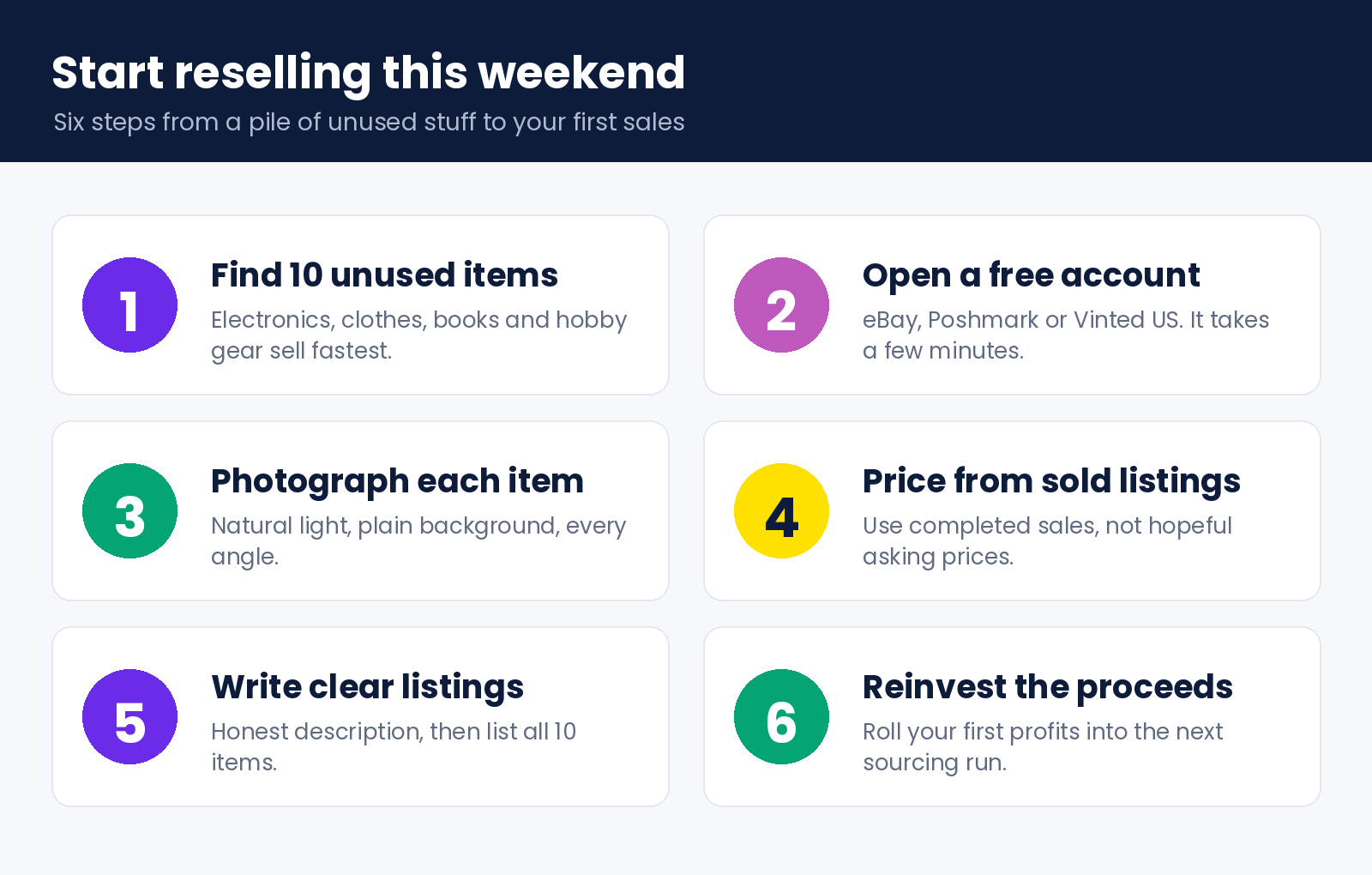
The fastest version of getting started:
- Find 10 things around your home you no longer use. Old electronics, clothes, books, kitchen gear, and hobby equipment sell well and are the easiest first test.
- Create a free account on eBay, Poshmark, or Vinted
- Photograph each item in natural light against a plain background.
- Check sold, completed listings to see what buyers actually paid, not what sellers are hoping for, and price from that.
- Write a clear, honest description and list all 10 items.
- See what sells, learn from what does not, and put the proceeds toward your next sourcing run.
That is the business in its first week. For the full playbook on building a reselling operation that runs without taking over your life, the Reseller Handbook 2026 walks through sourcing, pricing, and scaling step by step.
Frequently asked questions
Is reselling a good side hustle for beginners?
Yes. Reselling has one of the lowest barriers of any side hustle. You can start free with items you already own, list them on apps you join in minutes, and only pay fees when something sells. It rewards consistency over upfront money, which makes it well suited to beginners testing the waters.
How much money can you make reselling?
A realistic casual range is a few hundred dollars a month at 5 to 10 hours a week. Income scales as you reinvest profit, get faster at listing, and sell across more platforms. OfferUp found 57% of resellers use the earnings to cover bills, so for many it becomes meaningful, dependable income.
What are the best things to resell as a beginner?
Start with what sells fast and ships easily: clothing and shoes from known brands, electronics, books, and small home or hobby items. Look for things you can buy low and sell high after fees, that are easy to ship, and whose condition you can improve with a clean and good photos.
Do I need money to start reselling?
No. You can start with zero investment by listing things you already own. Most platforms only charge fees when you make a sale, and Vinted US currently charges sellers nothing. Once you have your first profits, you reinvest them into sourcing more inventory rather than risking your own cash.
The bottom line
Is reselling a good side hustle in 2026? For most people, yes. The market is large and growing, the buyers are already there, and you can start for free this weekend. What separates a few hundred dollars a month from a real income is treating it like a system rather than a clear-out.
Ready to spend less time listing and more time selling? Start a free Listing Monster trial and see how much of the grind disappears. If you would rather plan first, the Reseller Handbook 2026 is the full operating guide.

.png)