How to Start Reselling With £100
If you've got £100 and want to start reselling, the honest advice is: don't spend it on stock yet. Spend a small amount testing what sells in your area first, keep £15 to £20 back for postage and packaging, and reinvest every sale straight into more stock. Most beginners lose money in week one because they buy before they've listed anything, not because they picked the wrong items.
This isn't a guide about liquidation pallets or wholesale lots. At £100, that route is a trap, not a shortcut. This is about what actually works when your budget is genuinely tight: charity shops, car boots, your own wardrobe, and a platform that suits what you're selling.
Where your £100 should actually go
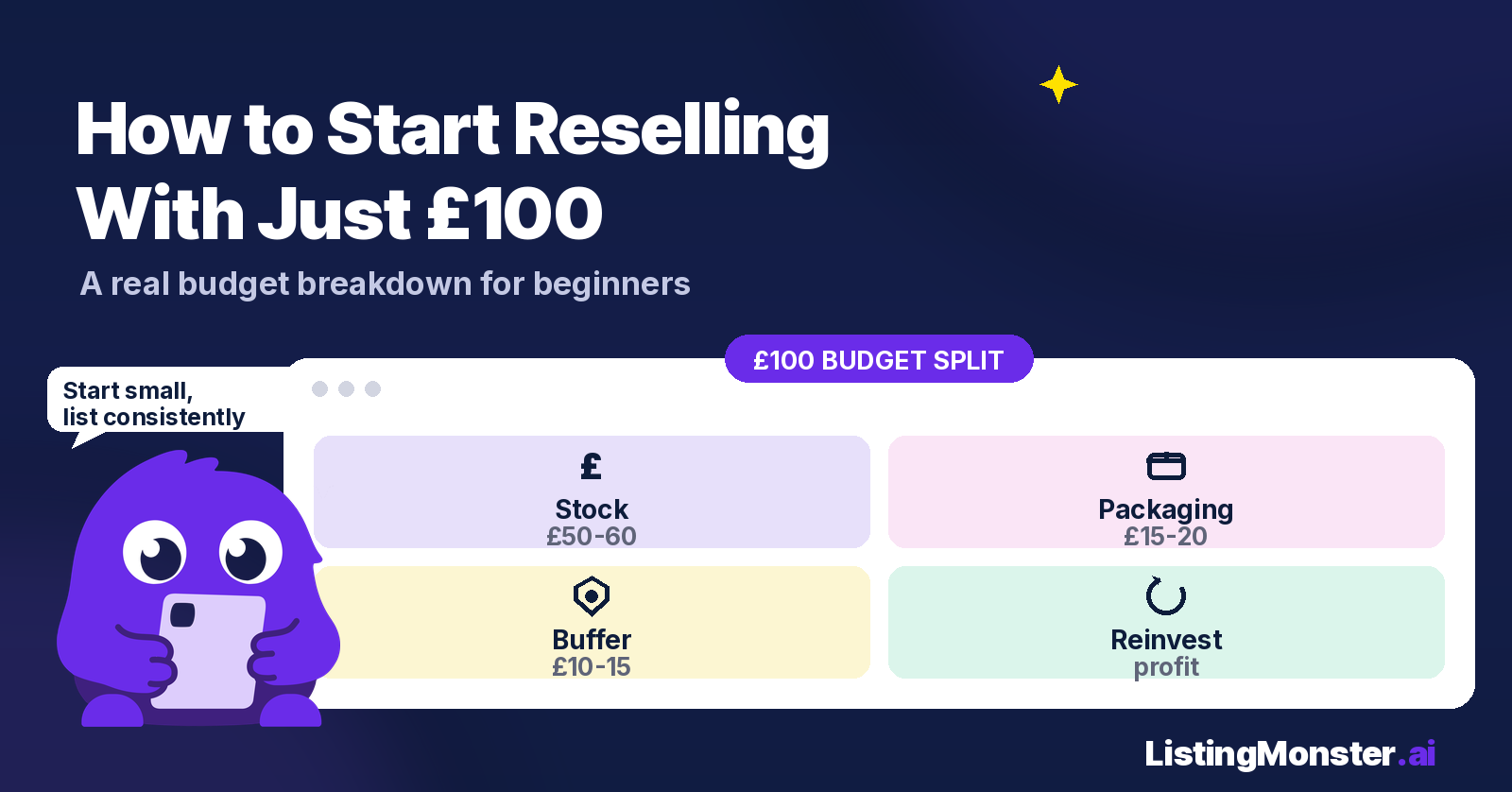
Most beginner guides tell you to buy stock. They don't tell you how to split the money, and that's where people go wrong. Here's a split that's worked for me and for resellers I know who started the same way:
- £50 to £60 on your first stock. Enough for 8 to 15 items depending on category, not one expensive gamble.
- £15 to £20 on packaging. Postage bags, tape, a decent set of scales. You need this before your first sale, not after.
- £10 to £15 held back as a buffer. Covers an eBay fee you forgot about, a return, or an item that doesn't sell at your first price.
- The rest reinvested after your first few sales. Don't touch it until stock has actually moved.
The mistake I see constantly is spending the full £100 on stock and then realising there's no money left for postage bags. You end up delaying your first listing by a week while you scrape together £15 for basic supplies. Sort the boring stuff first.
Start with what you already own
Before you spend a penny, go through your own wardrobe and cupboards. This costs nothing, it's the fastest way to learn how listing, photographing, and posting actually works, and it tells you which platform suits your stock before you've committed any money to buying more.
I'd rather someone list 10 items from their own wardrobe in week one than spend £100 sourcing stock they don't understand yet. You'll make mistakes on pricing and photography either way. Better to make them on things that cost you nothing.
Charity shop and car boot sourcing on a tight budget
Once your own stock is listed, charity shops and car boots are the best use of a £100 budget. You're buying single items, not bulk lots, so your risk per item is small and you can walk away from anything that looks like a dud.
A few things that make a real difference at this budget:
- Check labels properly. Certain brands and eras hold value consistently on Vinted and Depop. Learn 10 to 15 of them cold before you start buying, rather than guessing on the shop floor or across a car boot table.
- Car boots reward early arrival and cash in hand. The best stock goes in the first half hour, and sellers are far more open to a lower offer on a bundle if you're paying cash on the spot rather than haggling item by item.
- Buy across price points. A £2 item that sells for £15 and a £12 item that sells for £45 both matter. Don't only chase the expensive-looking rail or the seller who clearly knows what they've got.
- Keep a running total on your phone. It's easy to lose track of spend across a few shops or a car boot in one morning, and £100 disappears fast if you're not watching it.
Why wholesale and bulk lots are the wrong move at this budget
Almost every other £100 or £300 reselling guide online will point you toward wholesale pallets or clearance lots. Be cautious here. Grading on bulk vintage and clearance lots is inconsistent even from reputable suppliers, and at £100 you don't have the buffer to absorb a lot that comes in worse than described.
I've bought vintage wholesale lots that were graded well on paper and turned up with issues that meant a chunk of the lot wasn't sellable at the price I'd planned for. That's a manageable setback when you're buying at volume with margin built in. At £100, one bad lot can wipe out your entire starting budget. Wholesale has its place, but it's a scaling decision for later, not a starting one.
Picking your first platform
Don't try to list everywhere at once. Pick one platform to start, based on what you're actually selling:
- Vinted if you're mostly selling clothing. No seller fees, the buyer pays Buyer Protection, and it's the fastest platform to get comfortable with for casual sellers.
- Depop if your stock leans vintage, streetwear, or you're selling to a younger buyer who shops by look rather than by brand search.
- eBay if you've got branded items, electronics, or anything where buyer protection and reach matter more than speed of listing.
You can add a second platform once you're comfortable with the first. Trying to manage three platforms in week one, on a £100 budget, just adds admin without adding sales.
Build a listing habit, not a listing binge
The resellers who make £100 turn into something real aren't the ones who source hard for a weekend and then go quiet. They're the ones who show up consistently. I've listed on Depop between 6 and 8pm most evenings for years now, not because that's some magic time slot, but because having a fixed slot means it happens. Consistency beats intensity almost every time in reselling.
At this budget, that matters more than it sounds. A steady trickle of listings means a steady trickle of sales, which means you're reinvesting into stock every week rather than waiting for one big sourcing trip to pay off.
What to expect in your first month
Be realistic about the timeline. Most beginners don't make a profit in week one, they make their money back. That's a good outcome, not a disappointing one. Vinted and Depop sales can come through within 48 hours of listing if you've priced sensibly, but plenty of items take two to four weeks to find the right buyer.
Track everything from day one. What you paid, what you sold for, and what fees and postage actually cost you. Without this, you're guessing whether you're actually making money or just moving stock around at a loss. A simple notes app or spreadsheet is enough at this stage.
For a deeper look at how profit per item and time per item combine to actually build an income from this, the Reseller Handbook 2026 is worth a proper read once you're past your first few sales. And if listing ever starts eating more evenings than you'd like once you're doing more than a handful a week, that's usually the point manual starts to hurt.
FAQs
Can I really start reselling with just £100?
Yes. £100 is enough to source your first small batch of stock, cover basic packaging, and leave a buffer for fees. The key is not spending it all on stock. Hold back money for postage supplies and a contingency, and reinvest profit from early sales rather than dipping into savings for more stock.
Should I buy a wholesale pallet to start with £100?
No. Wholesale and clearance lots carry inconsistent grading, and a badly graded lot can wipe out a £100 budget in one purchase. Wholesale sourcing works better once you've got sales history, spare capital, and the margin to absorb the occasional bad lot.
Which platform is best for beginners with a small budget?
It depends on your stock. Vinted suits clothing and has no seller fees. Depop suits vintage and streetwear aimed at younger buyers. eBay suits branded goods and electronics where buyer protection matters more than listing speed. Pick one and get comfortable before adding a second.
How much of my £100 should I spend on stock?
Around £50 to £60 on your first stock, roughly 8 to 15 items depending on category. Keep £15 to £20 for packaging and postage supplies, and £10 to £15 as a buffer for fees or a slow-selling item. Reinvest profit from your first sales rather than spending the full amount upfront.
How long does it take to sell items when you're just starting out?
Some items sell within 48 hours if priced sensibly, especially on Vinted and Depop. Others take two to four weeks to find the right buyer. Don't expect a profit in week one. Getting your money back on your first batch is a solid result at this stage.


.png)